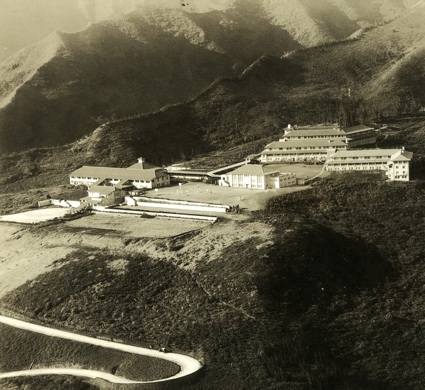
On October 31, 1883, Princess Bernice Pauahi Bishop—a Hawaiian aliʻi of profound vision—signed her last will and testament, dedicating her vast landholdings to the education and welfare of Native Hawaiian keiki. On that very same date in 2025, the planned cutoff of Supplemental Nutrition Assistance Program (SNAP) benefits for 42 million Americans loomed amid the federal government shutdown, an act that would take basic food assistance away from vulnerable families. That same night, Trump hosted a lavish “Great Gatsby”-themed Halloween party at his Mar‑a‑Lago estate in Palm Beach, Florida, just as federal SNAP benefits were expiring for millions of Americans. The optics were almost unbelievable: a fantasy of 1920s excess, sequins, and champagne, while children, the elderly, and other vulnerable people across the U.S. faced food insecurity. As comedian Jon Stewart observed, “the theme was apparently gross income inequality.”
The first act expresses an economic ethic of stewardship and responsibility for the greater good, and the second heralds the collapse of a generations-old public safety net amid rising private fortunes. The contrast could not be sharper.
ʻŌpū Aliʻi Ancestral Values of Generosity and Stewardship
Princess Pauahi stood as an exemplar of an Indigenous economic ethic rooted in communal responsibility. By transforming her own inherited land and resources into an enduring educational trust, she embodied the notion that privilege brings an obligation to uplift the lāhui and preserve culture for generations to come, not to hoard power for power’s sake.
Many of our aliʻi used their wealth to serve the broader public good. For instance, Queen Emma helped found the hospital that became The Queen’s Medical Center in Honolulu, established in response to epidemics ravaging the Hawaiian people. Queen Kapiʻolani raised the startup funds for what became Kapiʻolani Children’s Hospital for Native Hawaiian children. King William C. Lunalilo willed lands for the creation of a home for the elderly (Lunalilo Home), and Queen Liliʻuokalani placed her lands in a trust to provide for orphaned and destitute children via the Liliʻuokalani Trust.
These aliʻi models were about generational, institutional investment in health, education, care of kūpuna, and land as communal stewardship. Aliʻi of the late 1800s chose to utilize their wealth to establish perpetual trusts through the Hawaiian Kingdom legal system in the hopes of caring for ʻŌiwi (indigenous/aboriginal Hawaiians) in perpetuity. They also followed Hawaiian precedents practiced in the Ancestral Hawaiian Circular Economy, like Kālaiʻāina, which redistributed resources after the passing of a mōʻī. The waiwai, or wealth, in the ancestral economy was meant to flow like water to provide the nutrients to enhance the lives of those around them.
Philanthropy in America: Then and Now
The Gilded Age of Benevolent Billionaires?
In earlier American times, wealthy industrialists (though they built their fortunes through exploitative labor practices) became known for donating to social causes and constructing enduring public institutions, like universities, libraries, museums, and hospitals, that outlasted their lifetimes. For example, Andrew Carnegie donated over $55 million (in his era) to construct more than 2,500 libraries worldwide, 1,681 in the U.S. alone. He believed that anyone with access to books could self-educate and flourish, and famously wrote “The man who dies rich dies disgraced,” arguing that great wealth should be redistributed for the public good. Similarly, John D. Rockefeller (though less purely philanthropic) endowed universities, foundations and health institutions to build public capacity and conduct medical research. Several other wealthy families used their money to found universities throughout the United States.
The New Tech Broligarchy
Contrast that with many of today’s ultra-wealthy tech oligarchs, the billionaire Silicon Valley businessmen who now wield major influence in U.S. government and society. The philanthropists of the Gilded Age, for all their contradictions, believed in serving society at large. Wealth, in their view, carried a civic duty. By contrast, the new oligarchs have redefined philanthropy as personal innovation rather than public investment. Instead of endowing libraries or schools, they pour billions into artificial intelligence, private space ventures, or longevity projects, pursuits that mirror their own ambitions rather than address the structural inequities beneath them.
Elon Musk, now with a net worth over $500 billion (and with a new reported pay package of $1 trillion through Tesla as of November 7), and his companies have received enormous government support (at least $38 billion in contracts, loans, subsidies, and tax credits from federal and state government sources), he has publicly argued for major federal spending cuts and criticized social welfare programs even while his enterprises continue to draw on public financing. Jeff Bezos, despite occasional high-profile gifts, has been condemned for minimal relative giving, for avoiding the full commitments of the The Giving Pledge, and for associating with worker conditions and tax practices that contradict the rhetoric of benevolence.
The billionaires of today seem more focused on accumulation over redistribution, and spectacle over substance. Rather than seriously narrowing inequality, many of these “tech bros” continue to accrue enormous wealth, while their philanthropic giving remains a small fraction of their wealth and lacks the structural commitments of previous eras. The Gatsby-style party is a metaphor, celebrating isolation and extravagance while vast public need goes unmet. Despite this trend, it is important to highlight some positive examples. Warren Buffett has pledged vast sums to philanthropic endeavors, especially in partnership with Bill Gates. MacKenzie Scott (since her divorce from Jeff Bezos) has redistributed more than $19 billion to over 2,000 nonprofits, often in large, unrestricted grants trusting grassroots leadership.
Why the Comparison Matters
Because Hawaiian aliʻi regarded their lands, lineage, and resources as custodial rather than purely proprietary, their giving was anchored in kuleana (reciprocal responsibility) to the community and future generations. In contrast, many of today’s ultra-wealthy benefit massively from public infrastructure, policy, subsidy and market protections, yet channel far less of that inherited (or socially-enabled) advantage into shared institutions and long‐term communal welfare. While there are benevolent foundations that make a substantial difference in places like Hawaiʻi today, the gap between wealth enabled by society and wealth redeployed for society is the moral chasm that the aliʻi tradition challenges us to close.
Conclusion
As the famous saying goes, with great power comes great responsibility.
Wealth is not neutral. It is a force. When federal nutrition assistance faces cuts and the wealthiest continue to accrue fortunes, the hypocrisy becomes glaringly stark. Today’s elite too often fall into accumulation, spectacle and private vision. Imagine a revival of the aliʻi ethic in our current era. Rather than hoarding wealth for self-satisfaction, wealth is shared to work toward real justice and systemic transformation. If we are serious about social and economic justice, sustainability, and shared prosperity, then the question is not only how much is given, but how, for whom, with what structure, what accountability, and under what values.
Sources:
The Last Will and Testament of Bernice Pauahi Bishop, https://kaiwakiloumoku.ksbe.edu/article/heritage-center-the-last-will-and-testament-of-bernice-pauahi-bishop
Carole Cadwaladr, “It’s not too late to stop Trump and the tech broligarchy from controlling our lives, but we must act now,” The Guardian (April 20, 2025), https://www.theguardian.com/global/2025/apr/20/carole-cadwalladr-ted-talk-this-is-what-a-digital-coup-looks-like-its-not-too-late-to-stop-trump-and-the-silicon-valley-broligarchy-from-controlling-our-lives-but-we-must-act-now.
Tom Coffman, “History of Giving in Hawaii,” Hawaii Community Foundation, https://www.hawaiicommunityfoundation.org/centennial/history-of-giving-in-hawaii.
Anwesha Data, “Elon Musk Advocates for Federal Spending Cuts While Benefiting from Billions in Government Contracts,” TechStory (Feb. 11, 2025), https://techstory.in/elon-musk-advocates-for-federal-spending-cuts-while-benefiting-from-billions-in-government-contracts.
“How Jeff Bezos’ Philanthropy Compares to Warren Buffett and Bill Gates—and What It Means for Society,” Nasdaq (Jan. 31, 2025).
Beth Kowitt, “The Old Model of Billionaire Philanthropy is Ending,” Bloomberg (),
Sydney Lake, “MacKenzie Scott’s latest $60 million donation is a sign philanthropists are trying to fill the void from Trump’s cuts to FEMA,” Fortune (Oct. 29, 2025), https://fortune.com/2025/10/29/mackenzie-scott-60-million-gift-disaster-relief-fema-trump-cuts.
Sterling Wong, “Education as the Hope of a Nation: The founding of Kamehameha Schools was never about laws, treaties, or politics,” Ka Wai Ola (Oct. 1, 2025), https://kawaiola.news/hoonaauao/education-as-the-hope-of-a-nation.
“Jon Stewart on Trump’s Gatsby party: ‘The theme was apparently gross income inequality,’” The Guardian (Nov. 4, 2025), https://www.theguardian.com/culture/2025/nov/04/late-night-hosts-jon-stewart-stephen-colbert-jimmy-kimmel-seth-meyers.
.jpeg)